How Orthodontists Use 3D CBCT Imaging to Evaluate Airway Health
Airway health plays an important role in overall wellness, especially for children and adults experiencing symptoms like chronic mouth breathing, snoring, restless sleep, or difficulty breathing through the nose. While traditional dental X-rays provide valuable information about the teeth and jaws, they can’t fully capture the complex structures that affect the airway.
This is where 3D Cone Beam Computed Tomography (CBCT) imaging offers a significant advantage. By creating highly detailed three-dimensional images of the teeth, jaws, facial structures, and airway, CBCT technology gives orthodontists a more comprehensive view of a patient’s oral and facial anatomy. At Origin Orthodontics, 3D CBCT imaging is part of our commitment to providing modern, personalized care that looks beyond just straightening teeth.
The Role of 3D CBCT Imaging in Airway Evaluations
One of the biggest advantages of 3D CBCT imaging is its ability to provide a detailed view of the structures that influence breathing and airway function.
Measuring Airway Space
CBCT scans allow orthodontists like Dr. Ioanna Ulrich to assess the size and shape of the airway. This information can help identify areas where airflow may be more restricted compared to other regions.
Since the airway is a three-dimensional structure, traditional X-rays may not provide enough detail to accurately evaluate its volume and shape.
Evaluating Jaw Development
The position and development of the jaws can influence airway anatomy. CBCT imaging helps orthodontists evaluate:
- Upper jaw width
- Lower jaw position
- Facial growth patterns
- Skeletal relationships
This information is especially valuable when assessing growing children whose facial structures are still developing.
Identifying Anatomical Factors
CBCT imaging can also reveal anatomical distinctions that may affect breathing, including:
- Narrow upper jaws
- Constricted nasal passages
- Enlarged adenoids or tonsil regions
- Skeletal discrepancies affecting airway space
In these cases, an orthodontist may recommend additional evaluations from the appropriate healthcare providers.
Why Airway Health Matters
Airway health matters because breathing patterns can influence sleep quality, facial growth, jaw development, and overall wellness. When the airway is restricted, patients may experience concerns like mouth breathing, snoring, restless sleep, daytime fatigue, or difficulty focusing.
While orthodontists do not diagnose sleep disorders, they can evaluate jaw and facial structures that may be connected to airway concerns. When needed, they can also coordinate with ENTs, pediatricians, or sleep physicians for a more complete evaluation.
Learn More About Airway Orthodontics
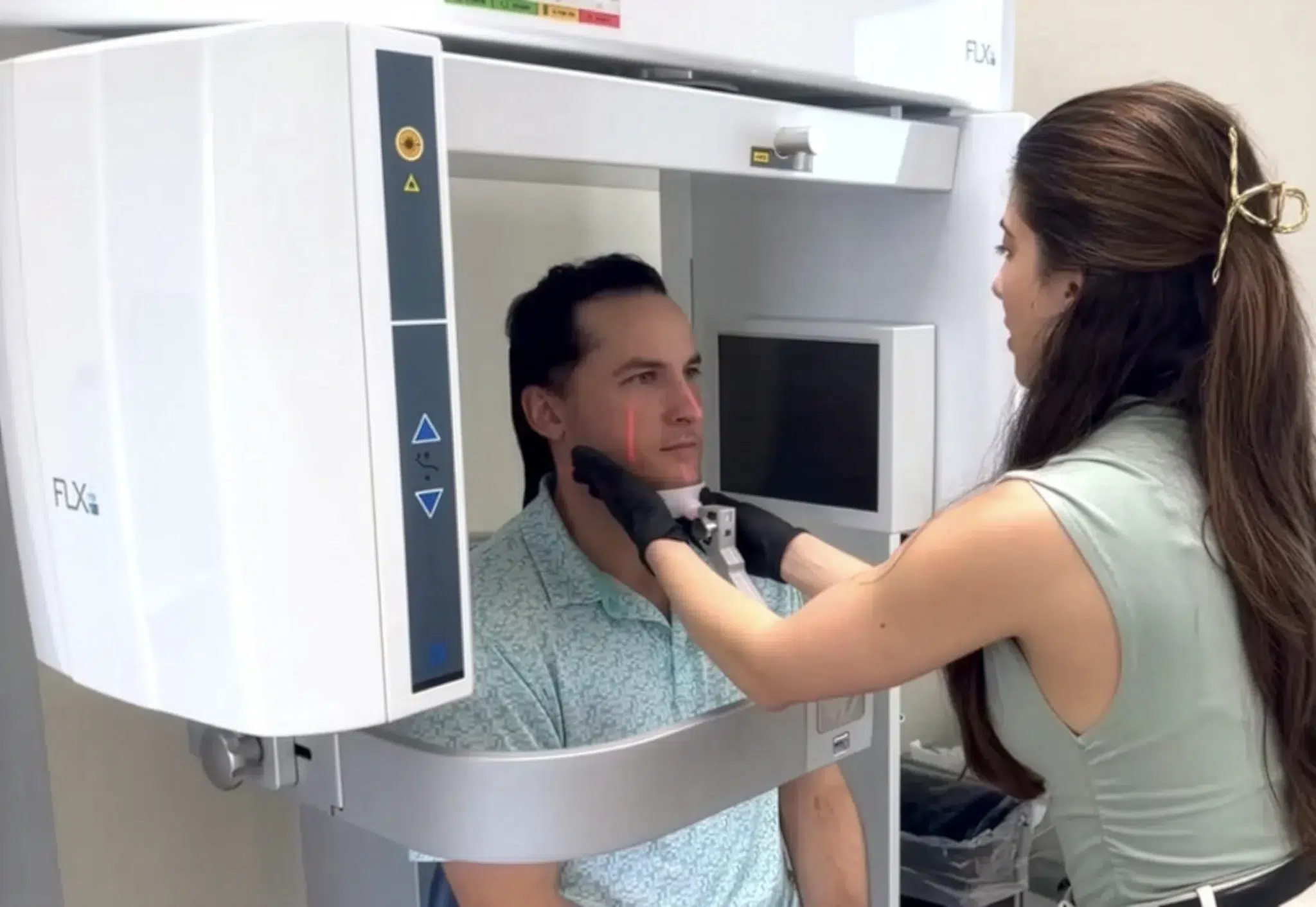
What To Expect During a 3D CBCT Scan
A CBCT scan is simple and typically takes less than a minute to complete.
During the scan:
- The patient stands or sits comfortably
- The machine rotates around the patient’s head
- Hundreds of images are captured
- Advanced software creates a detailed 3D model
The process is non-invasive and requires no special preparation.
Experience a Comprehensive Approach to Orthodontics and Airway Health
At Origin Orthodontics, Dr. Ulrich takes a patient-centered approach that considers the relationship between the teeth, jaws, facial development, and airway health. Our modern practice utilizes advanced technologies, including 3D CBCT imaging, to provide detailed evaluations and personalized treatment recommendations.
If you’d like to learn more about how 3D CBCT imaging supports orthodontic treatment planning and airway evaluations, we’re happy to answer your questions. Contact Origin Orthodontics today, or schedule your complimentary consultation to discover how advanced orthodontic technology can support a healthier smile and airway.